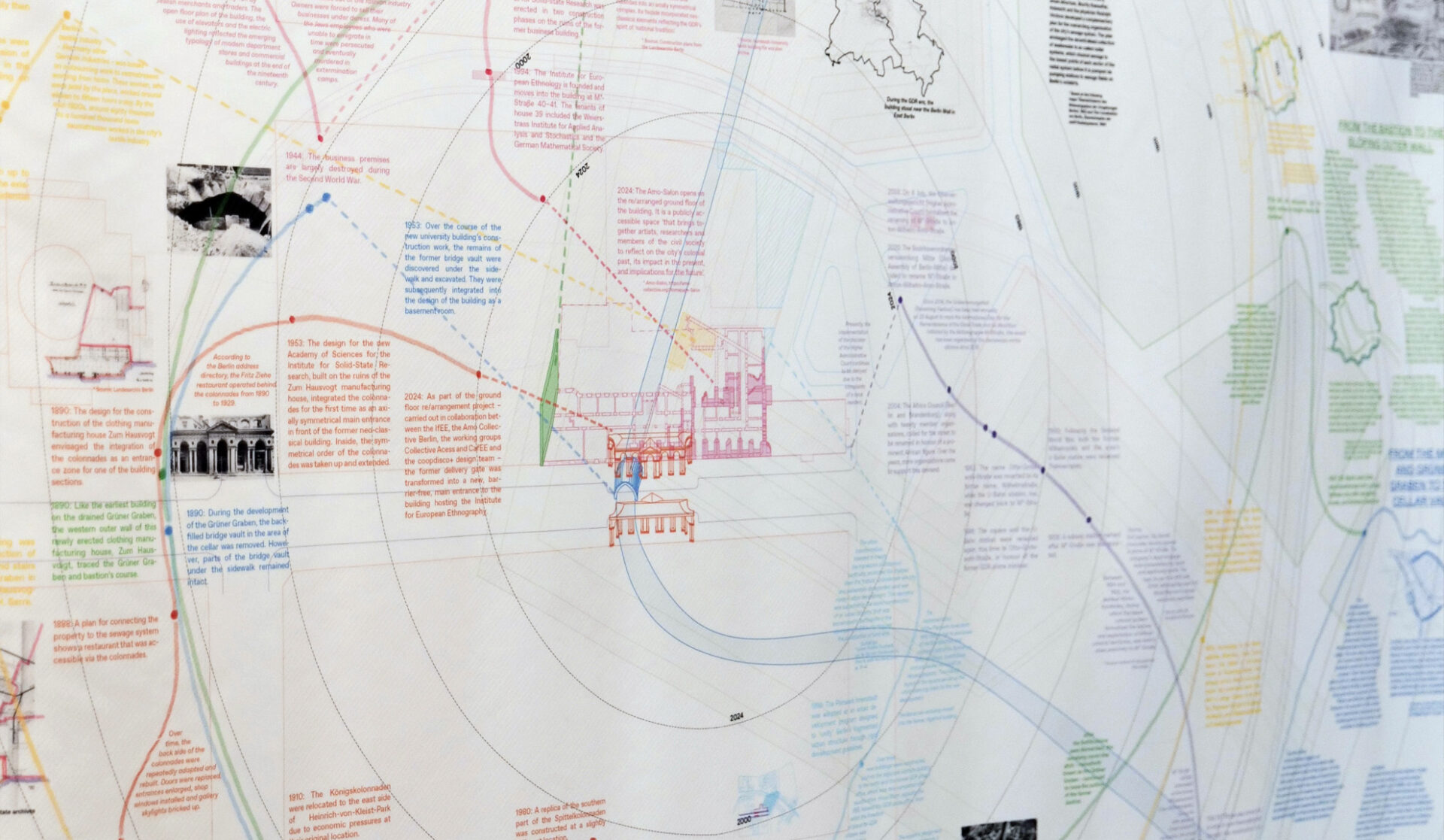
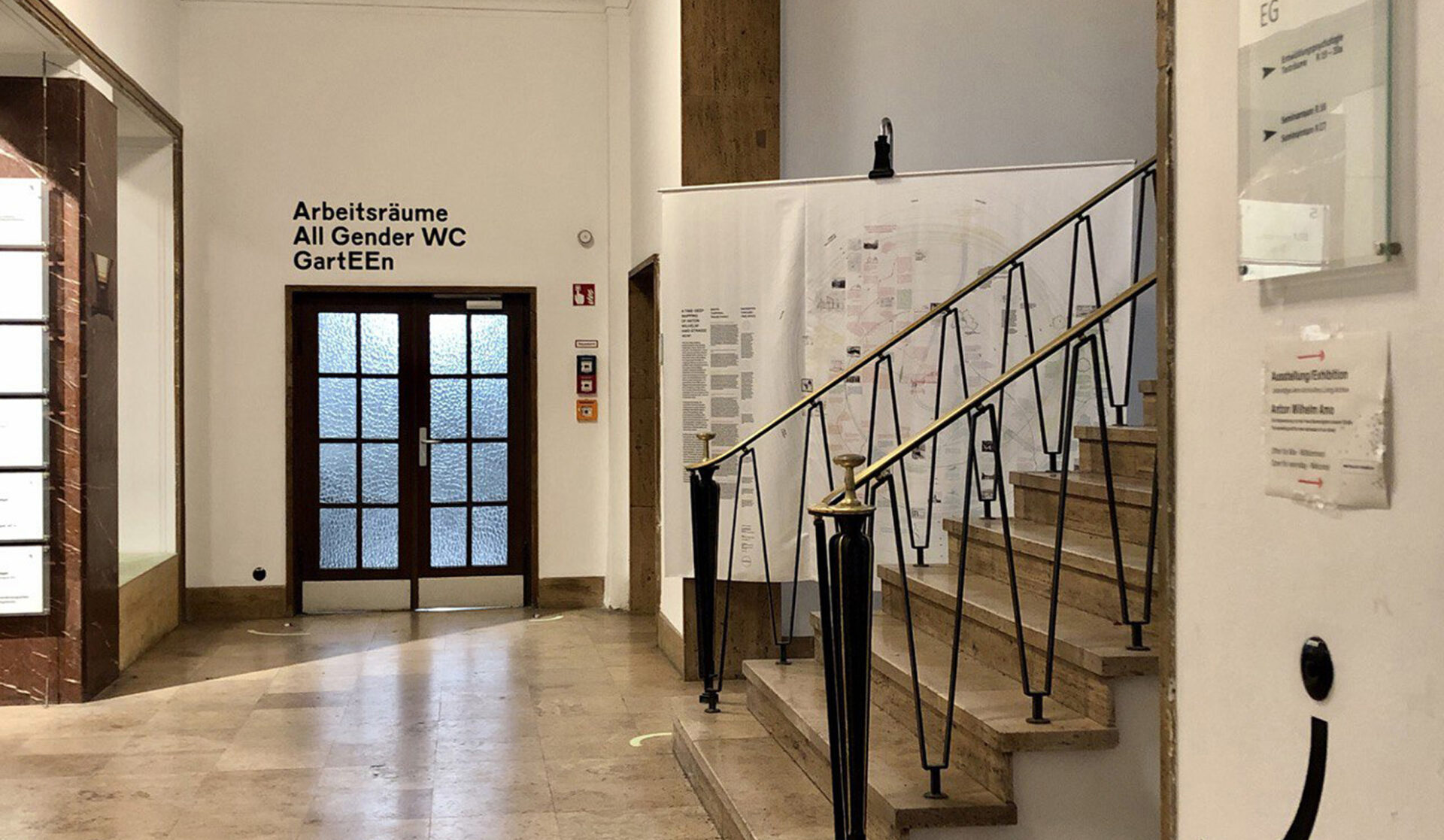
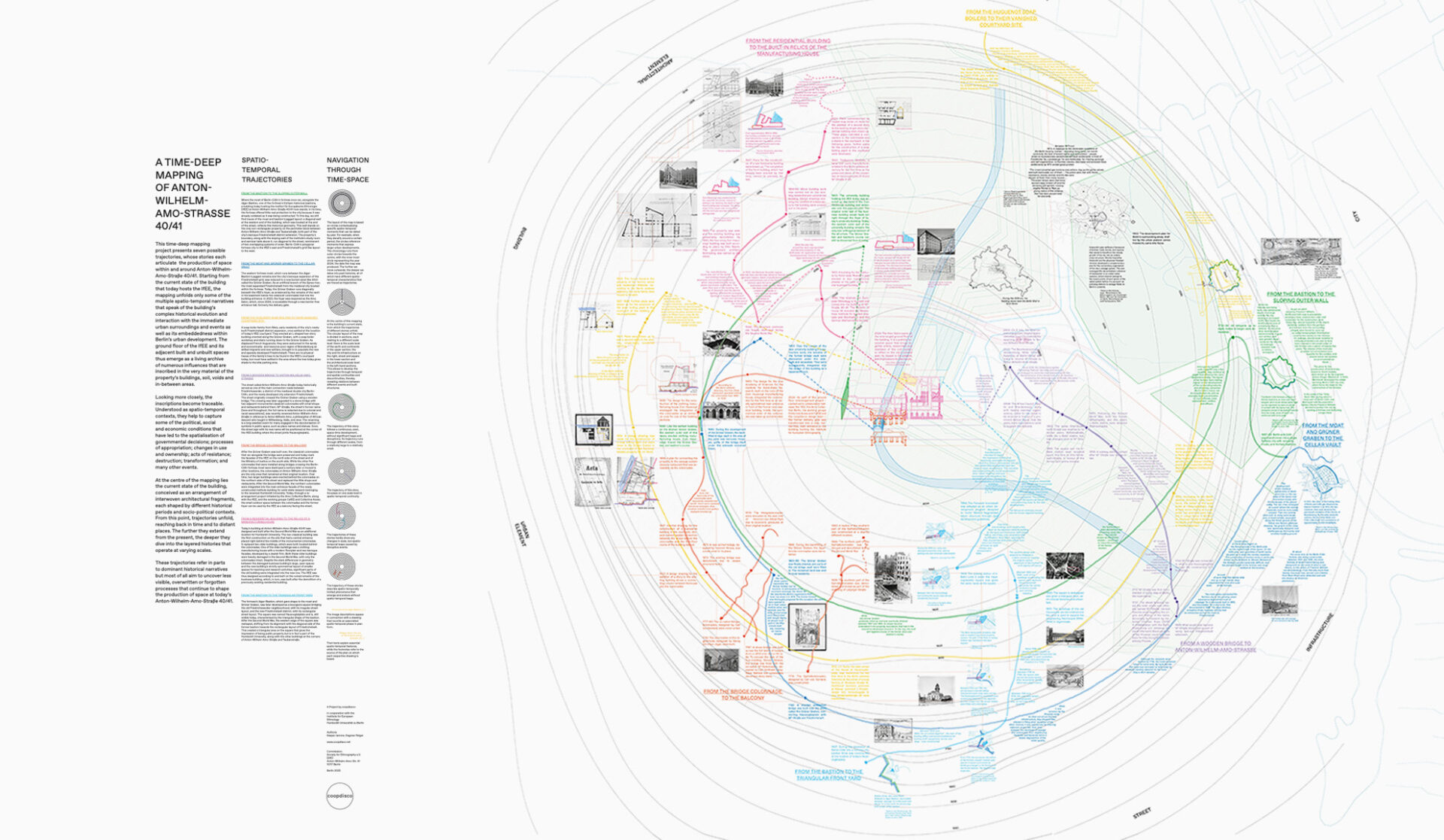
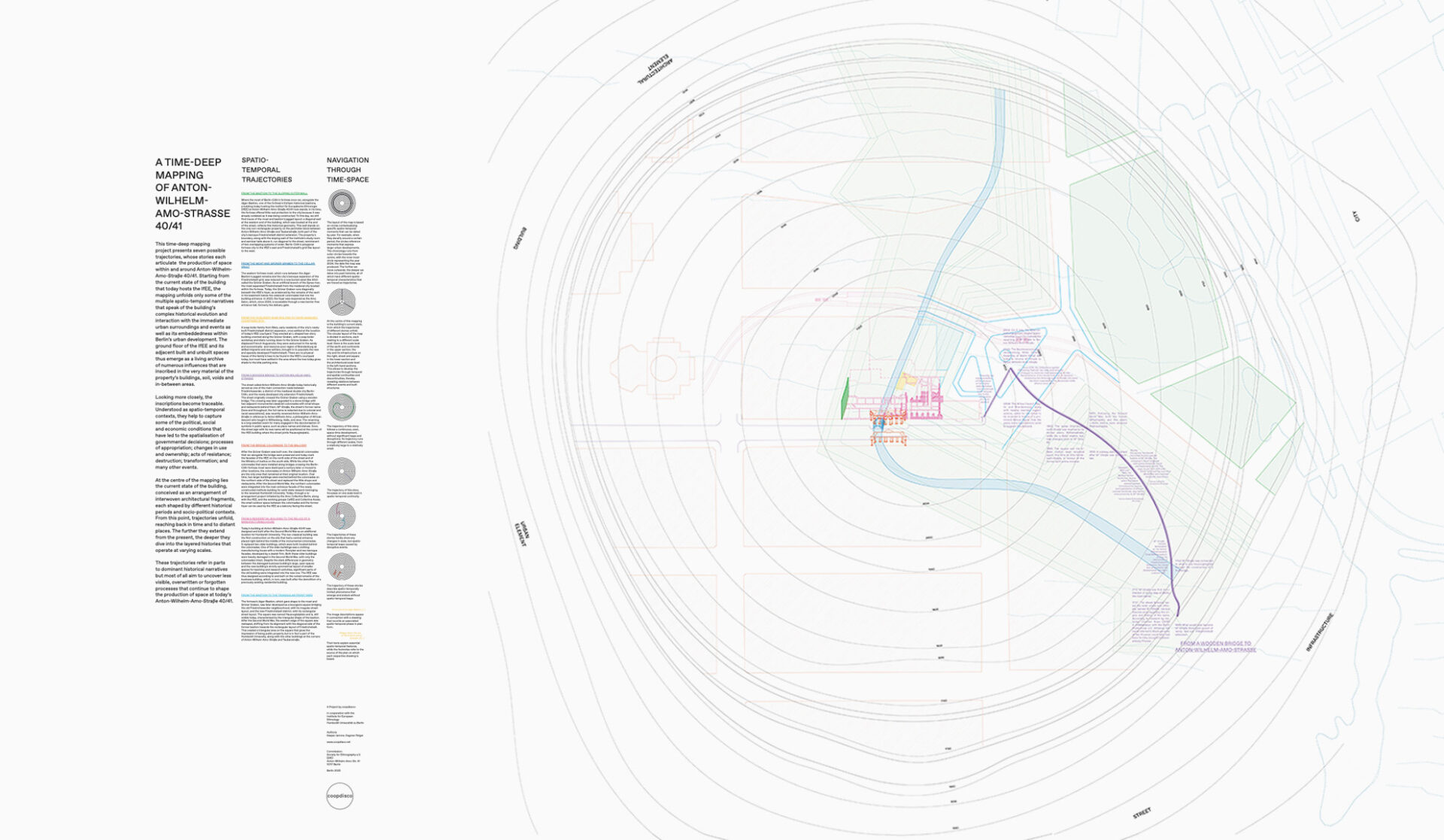
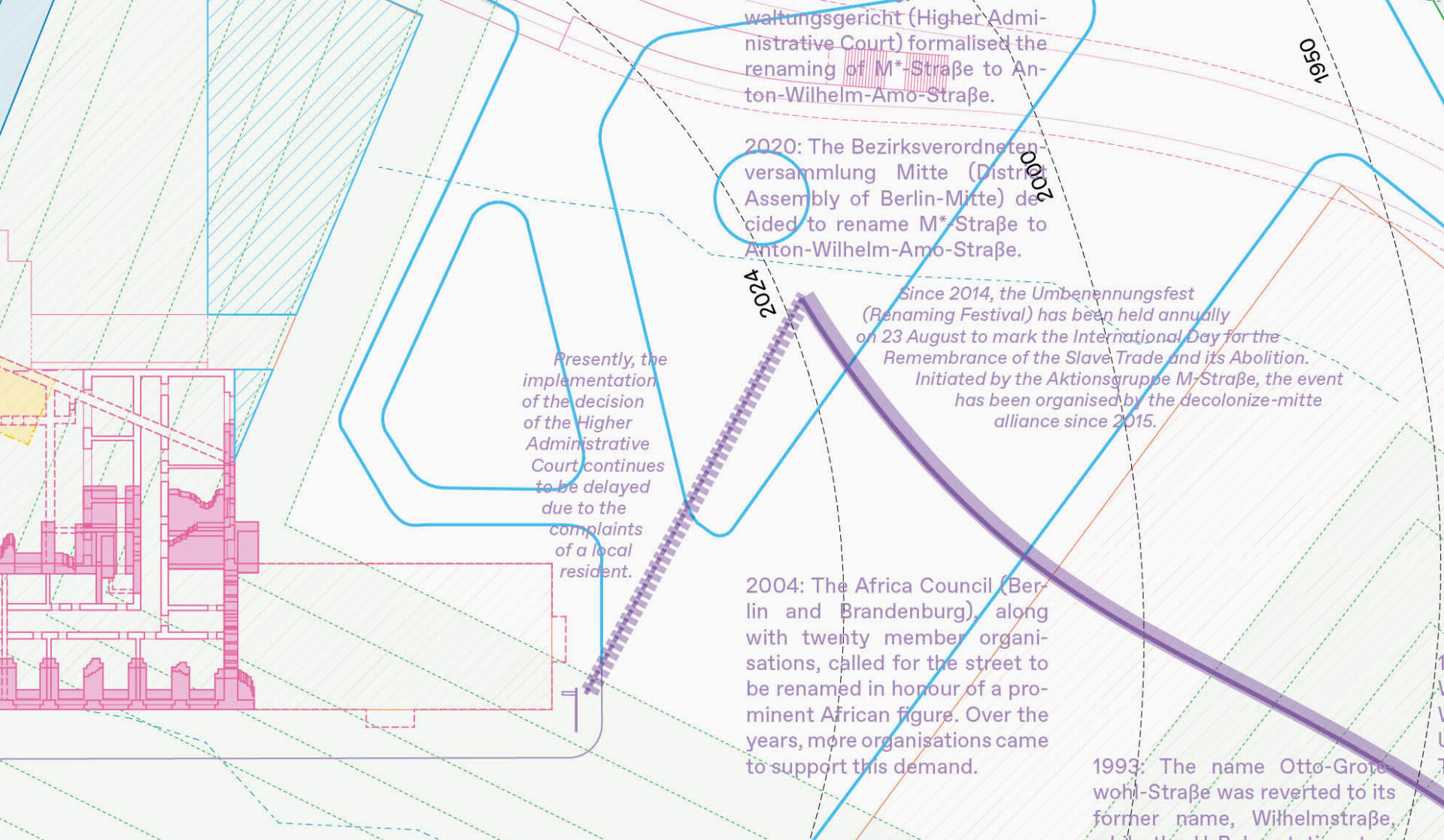
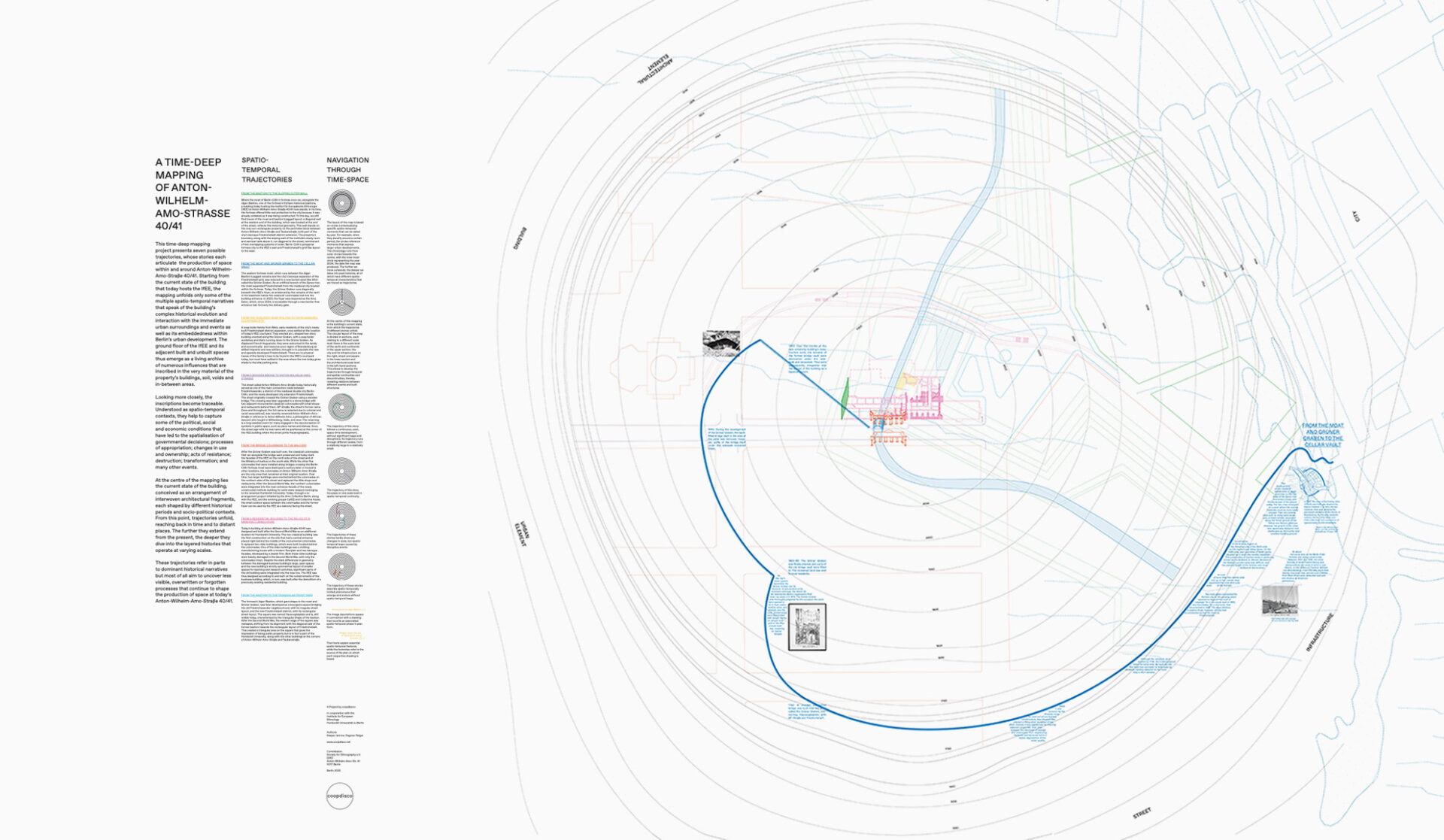
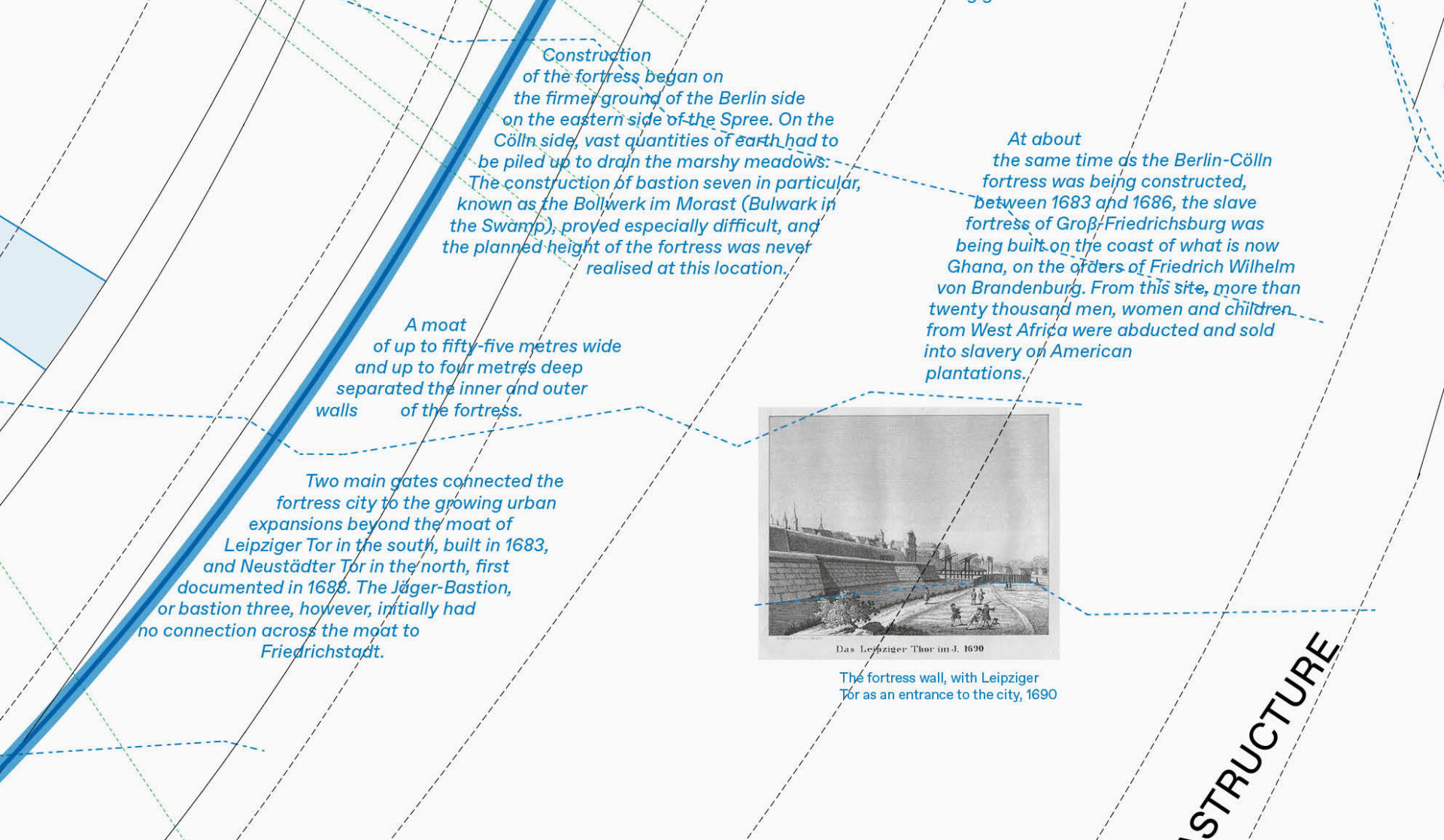
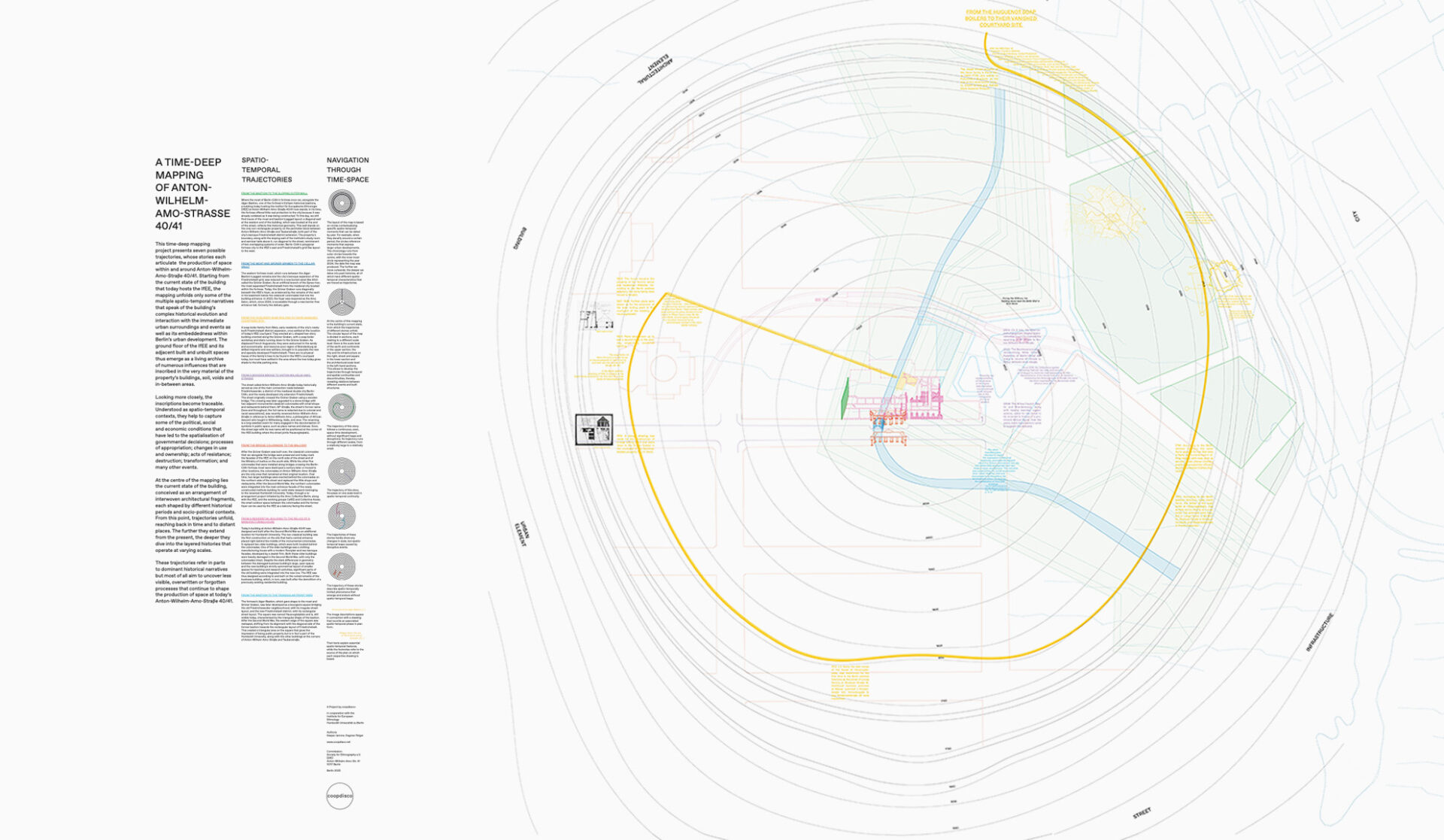
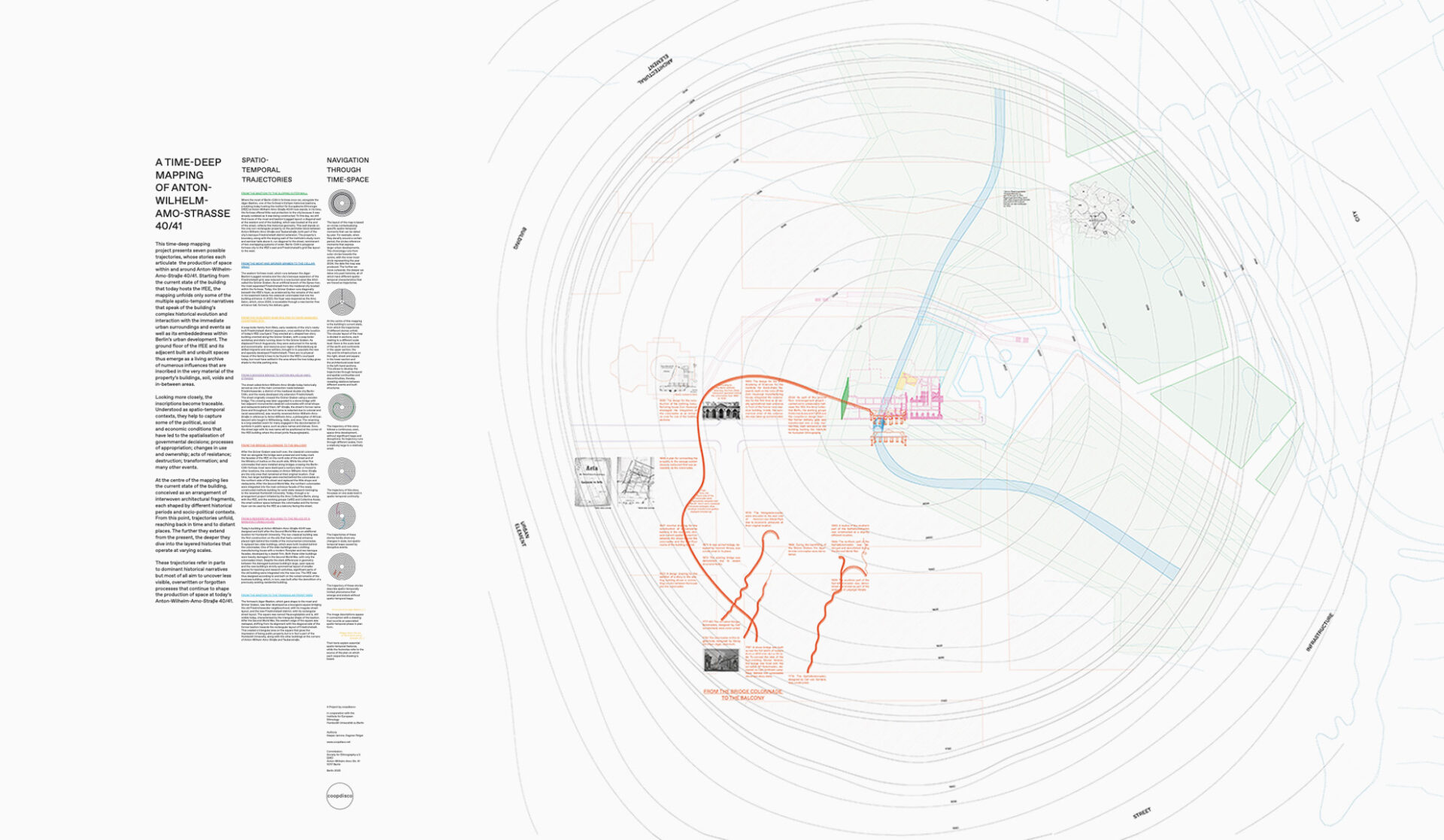
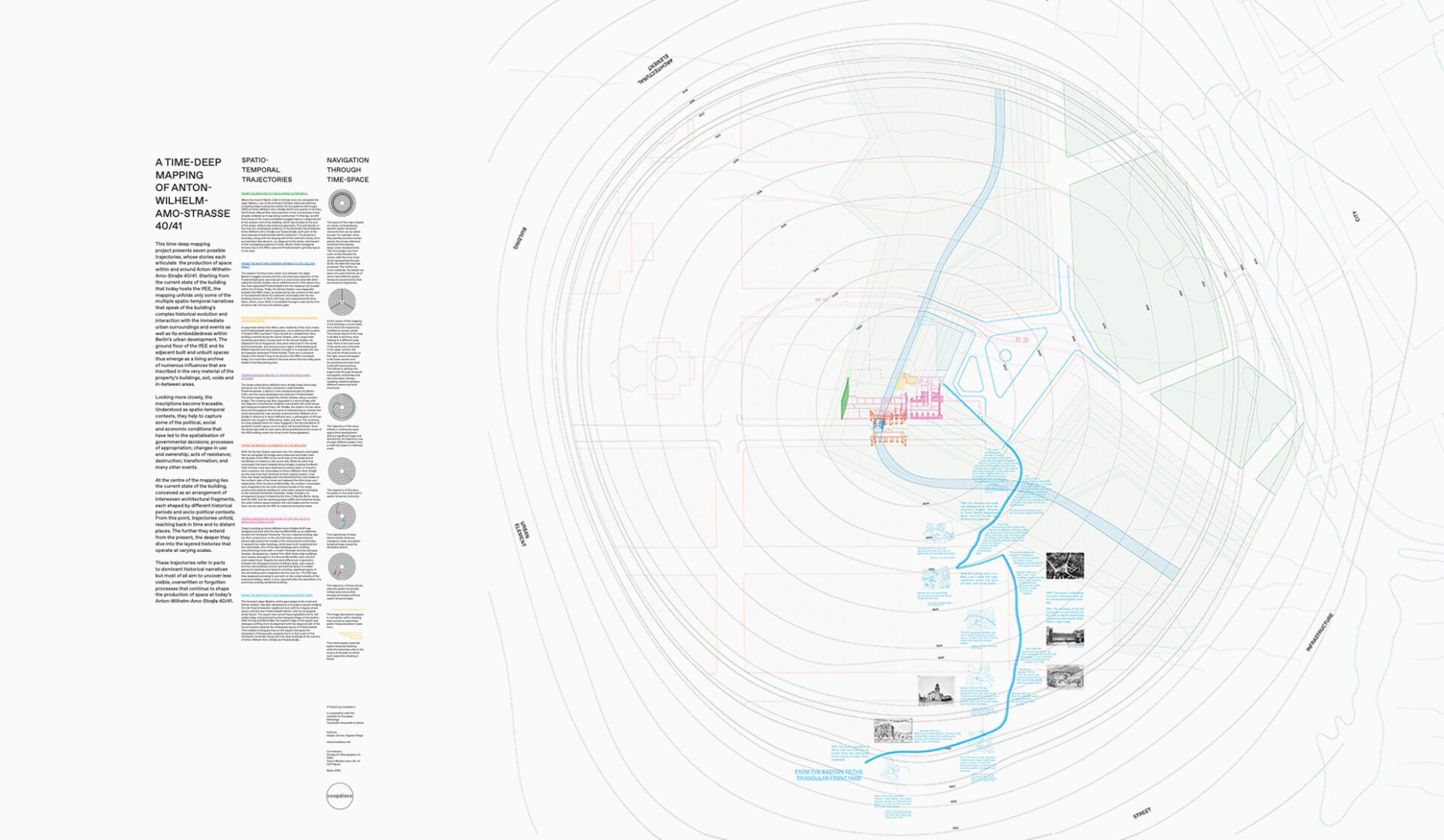
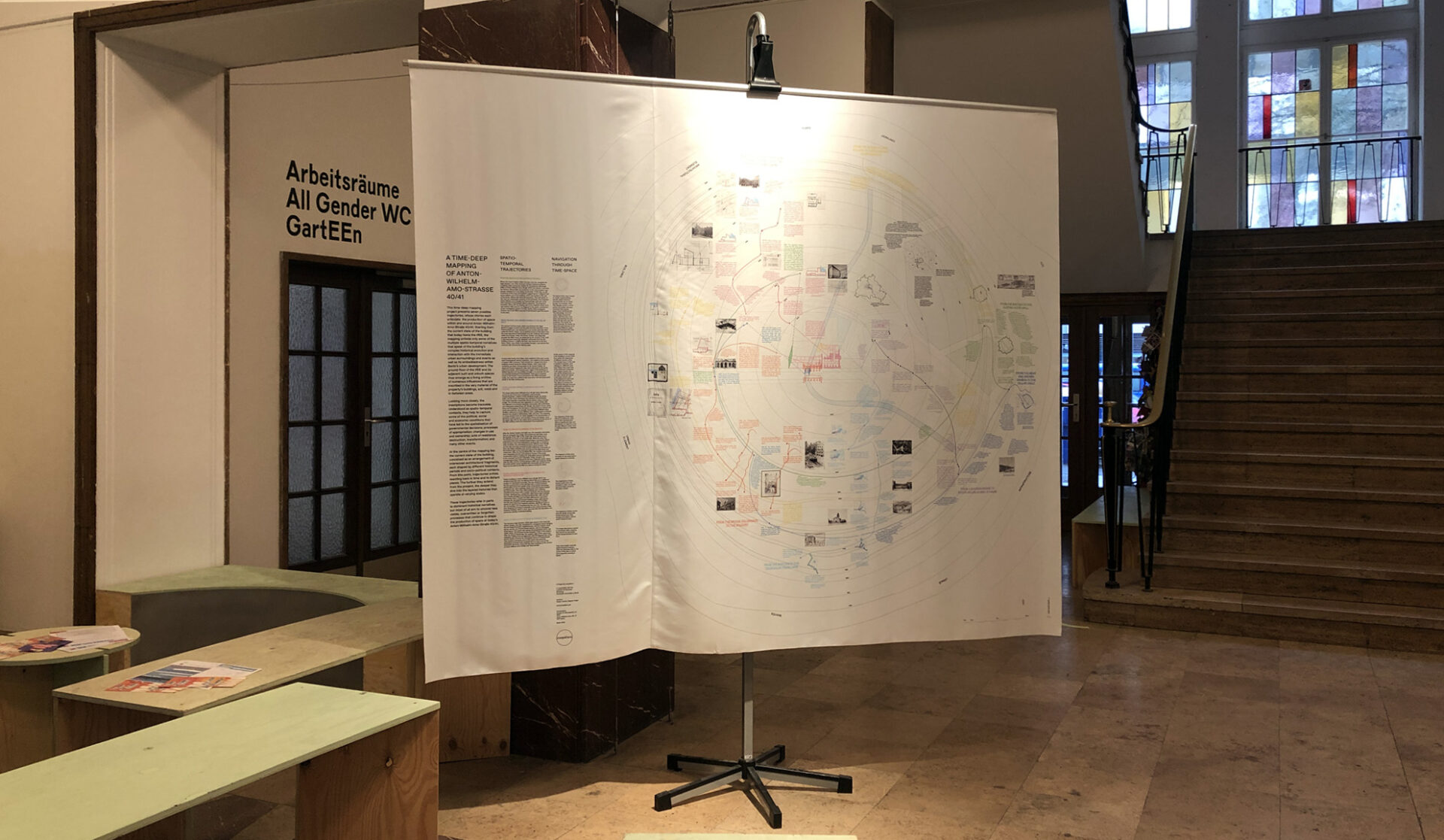
This time-deep mapping project, installed in the re/arranged groundfloor of th IfEE (Institute for Eurpean Ethnography at Humbold Universität zu Berlin), presents seven possible trajectories, whose stories each articulate the production of space within and around Anton-Wilhelm-Amo-Straße 40/41. Starting from the current state of the building that today hosts the IfEE, the mapping unfolds only some of the multiple spatio-temporal narratives that speak of the building’s complex historical evolution and interaction with the immediate urban surroundings and events as well as its embeddedness within Berlin’s urban development. The ground floor of the IfEE and its adjacent built and unbuilt spaces thus emerge as a living archive of numerous influences that are inscribed in the very material of the property’s buildings, soil, voids and in-between areas.
Looking more closely, the inscriptions become traceable. Understood as spatio-temporal contexts, they help to capture some of the political, social and economic conditions that have led to the spatialisation of governmental decisions; processes of appropriation; changes in use and ownership; acts of resistance; destruction; transformation; and many other events.
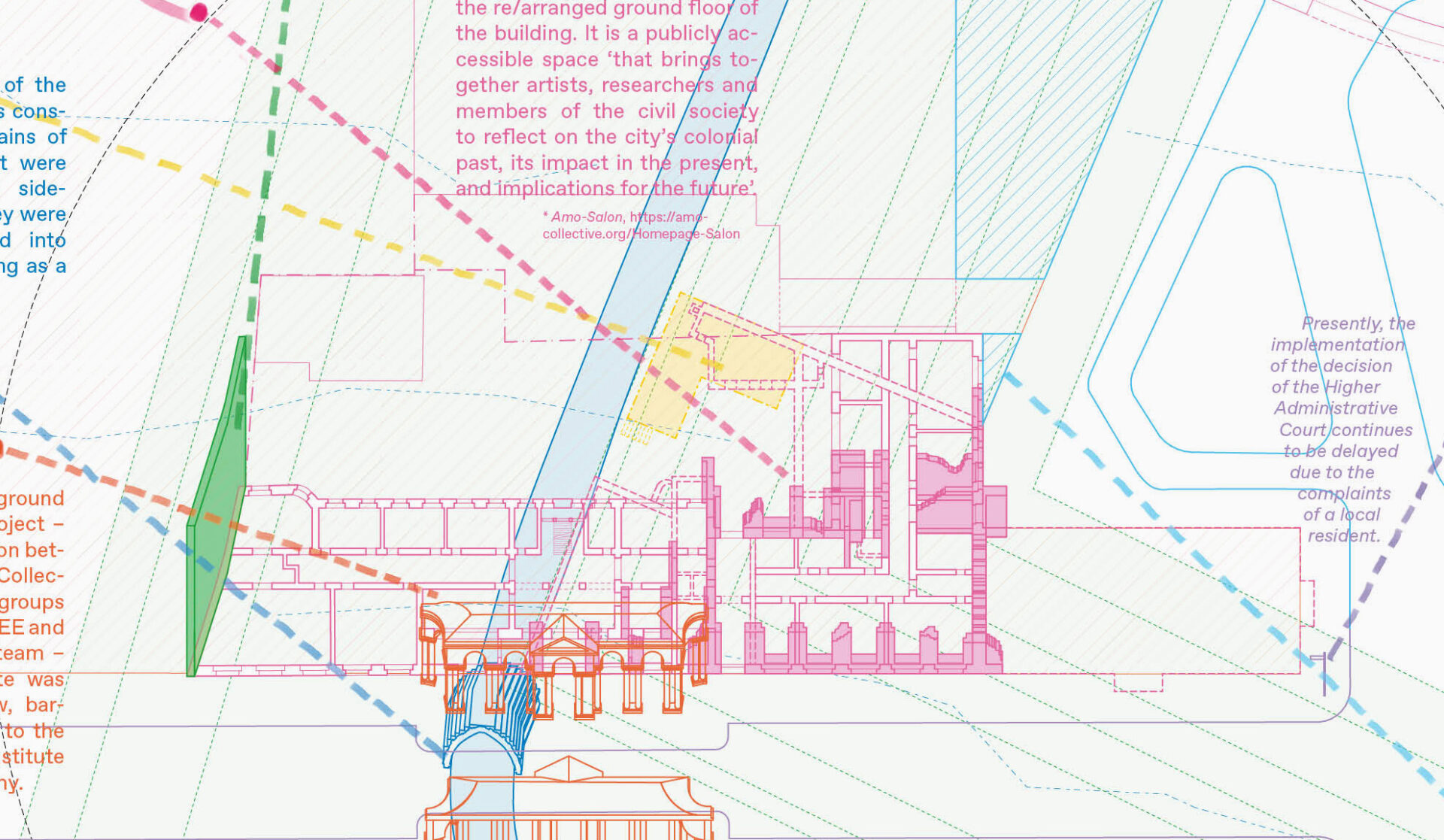
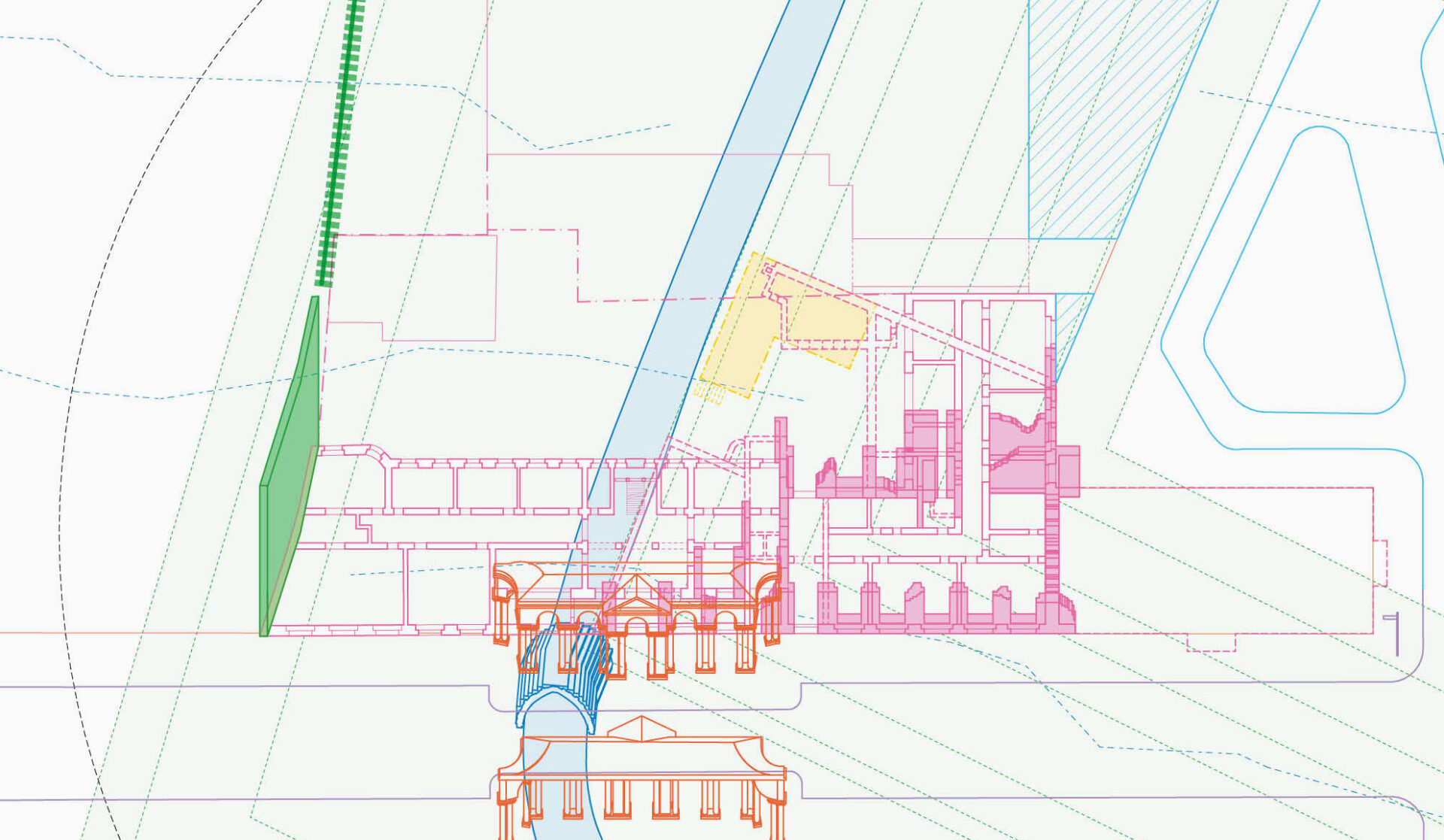
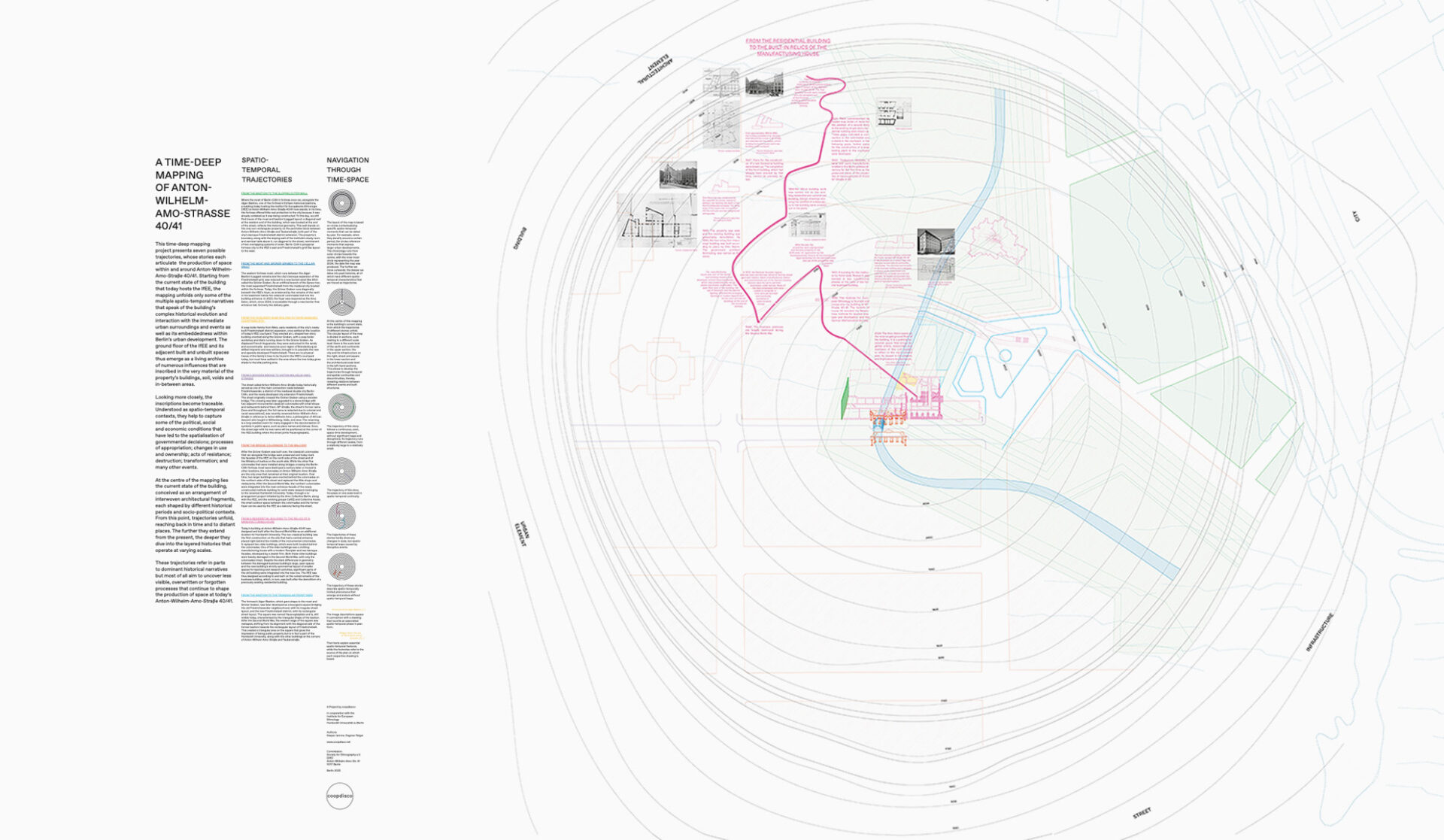
At the centre of the mapping lies the current state of the building, conceived as an arrangement of interwoven architectural fragments, each shaped by different historical periods and socio-political contexts. From this point, trajectories unfold, reaching back in time and to distant places. The further they extend from the present, the deeper they dive into the layered histories that operate at varying scales.
These trajectories refer in parts to dominant historical narratives but most of all aim to uncover less visible, overwritten or forgotten processes that continue to shape the production of space at today’s Anton-Wilhelm-Amo-Straße 40/41.
NAVIGATION THROUGH TIME-SPACE
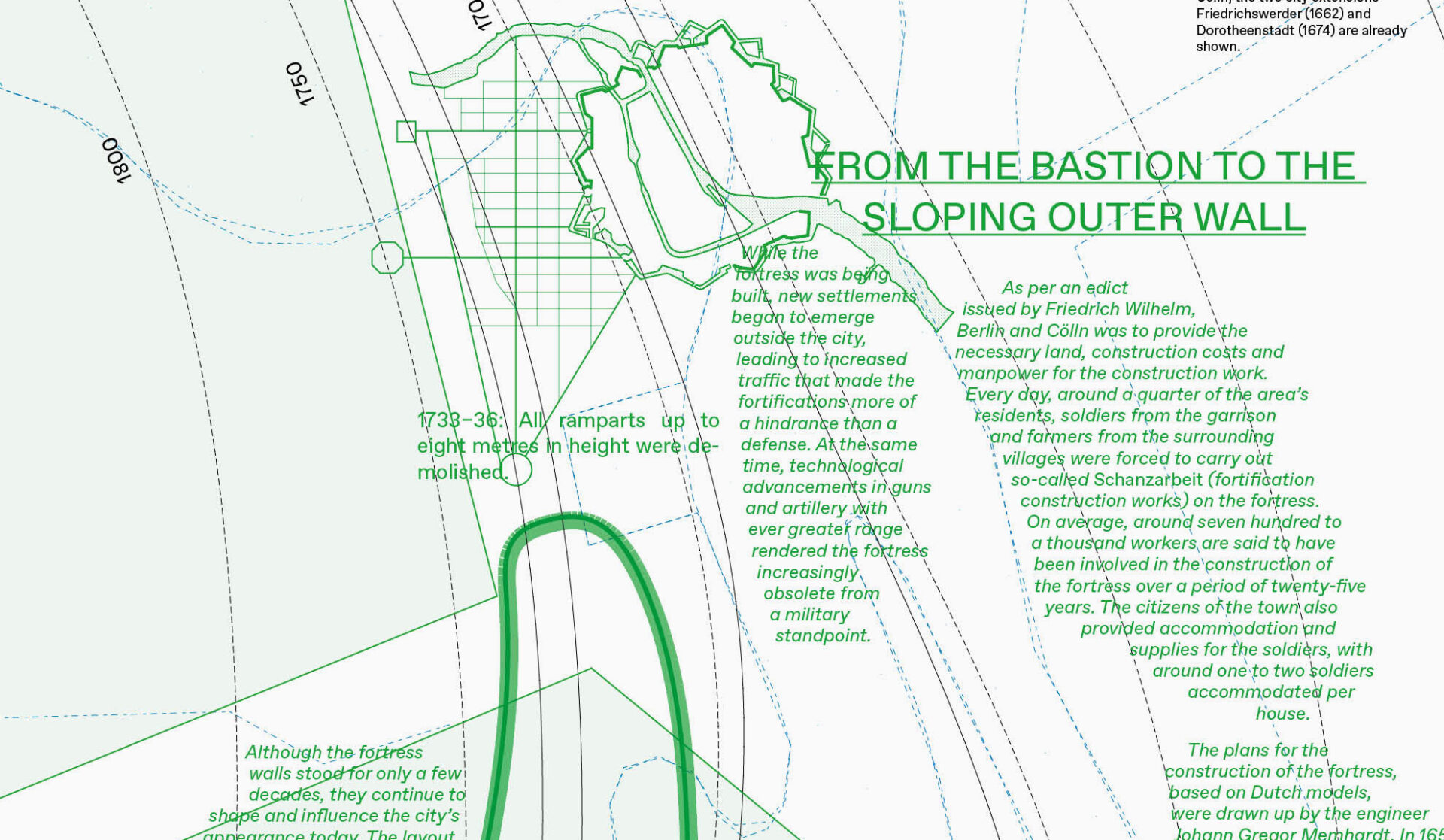
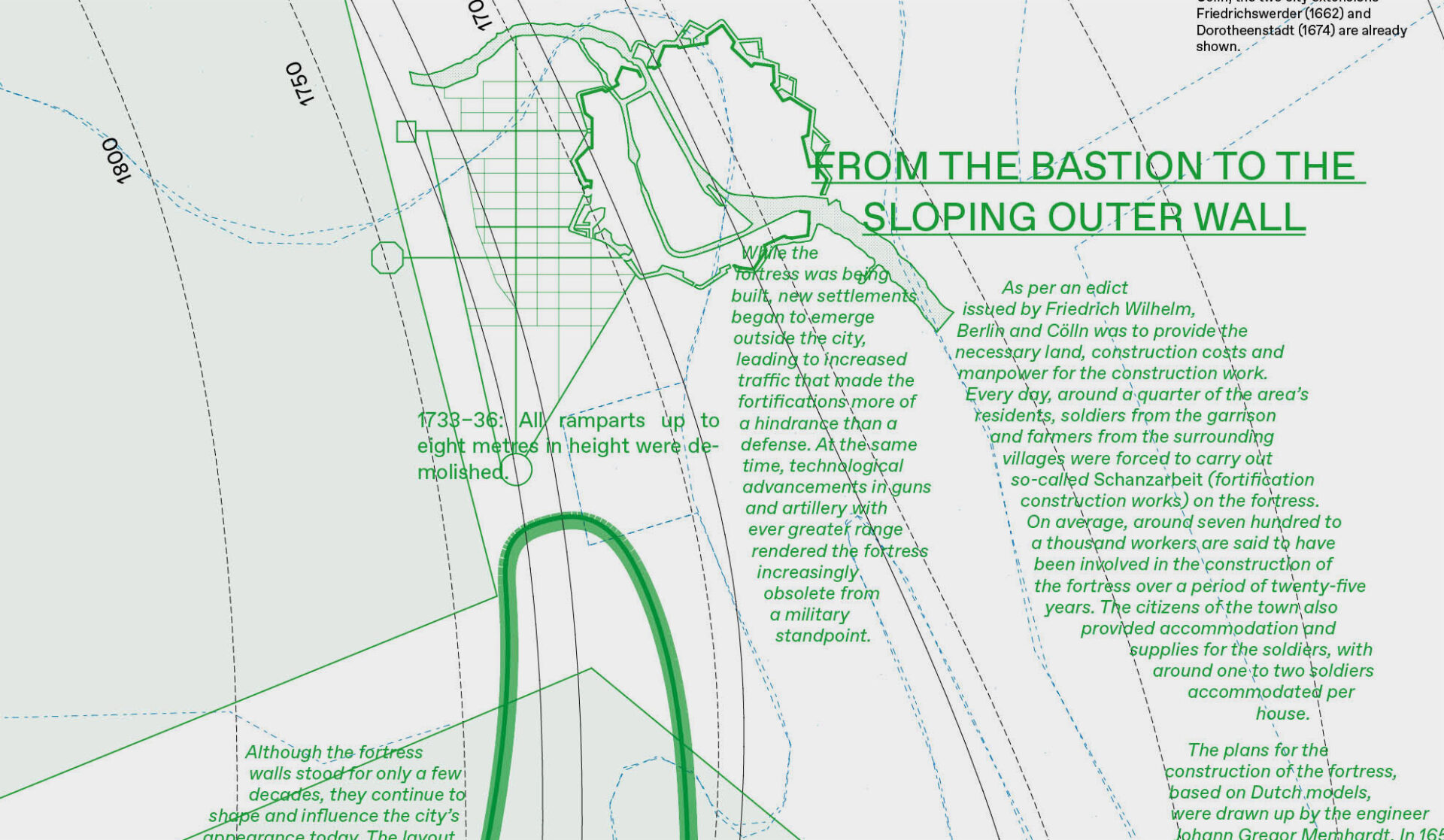
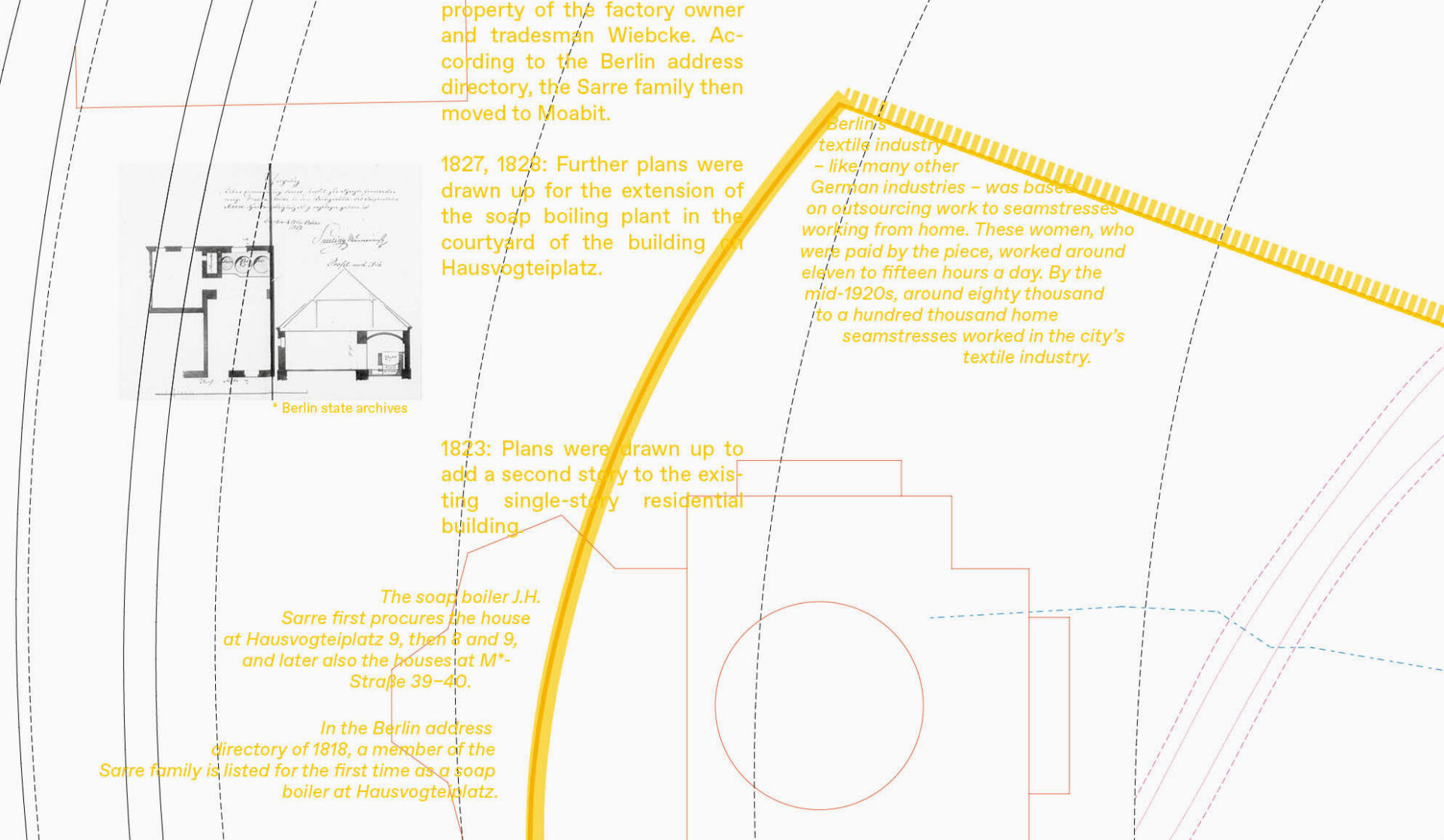
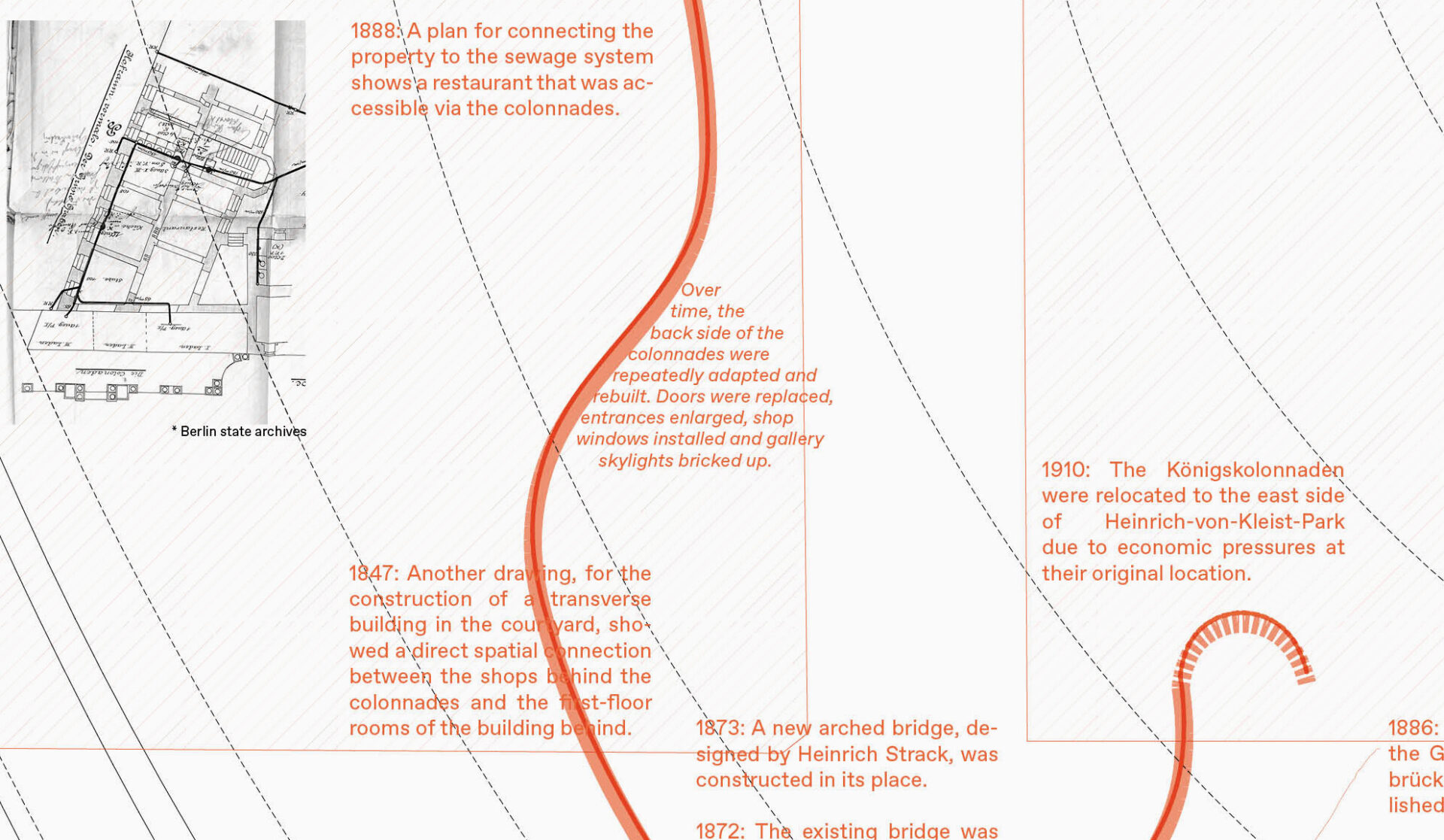
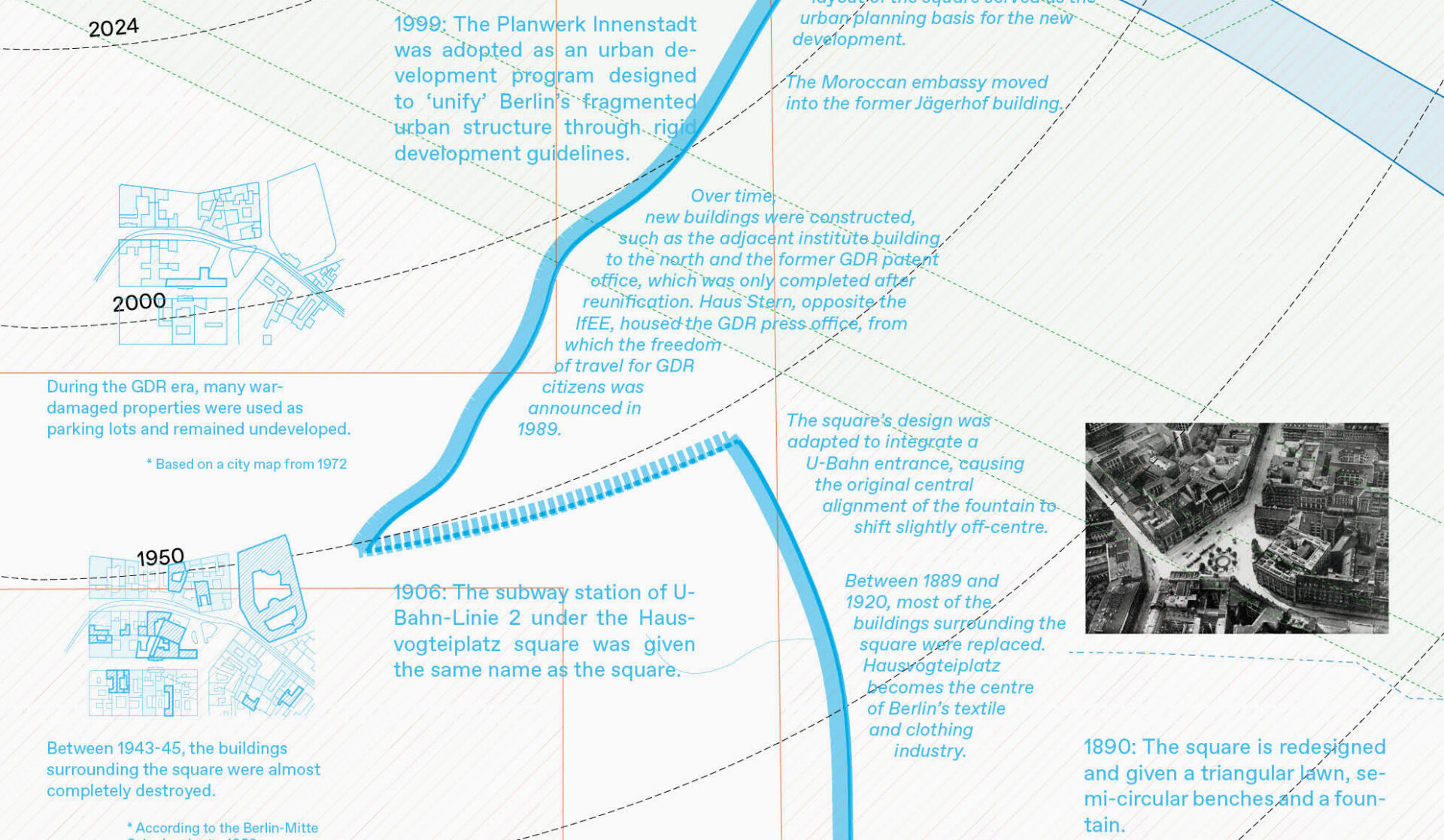
The layout of the map is based on circles contextualizing specific spatio-temporal moments that can be dated by year. For example, when they densify around a certain period, the circles reference moments that express larger urban developments. The chronology runs from outer circles towards the centre, with the inner most circle representing the year 2024, the date the map was produced. The further we move outwards, the deeper we delve into past histories, all of which have different spatio-temporal characteristics that are traced as trajectories.
At the centre of this mapping is the building’s current state, from which the trajectories of different stories unfold. The circular layout of the map is divided in sections, each relating to a different scale level: there is the scale level of the earth and continents in the upper section, the city and its infrastructure on the right, street and square in the lower section and the architectural scale level in the left-hand sections. This allows to develop the trajectories through temporal and spatial continuities and discontinuities, thereby revealing relations between different events and built structures.
Some trajectories follow a continuous, even, space-time development, without significant leaps and disruptions. These trajectory run through different scales, from a relatively large to a relatively small.
Other trajectories focus on one scale level in spatio-temporal continuity.
Certain trajectories hardly show any changes in scale, but spatio-temporal leaps caused by disruptive events.
And then there are trajectories which describe spatio-temporally limited phenomena that emerge and endure without spatio-temporal leaps.
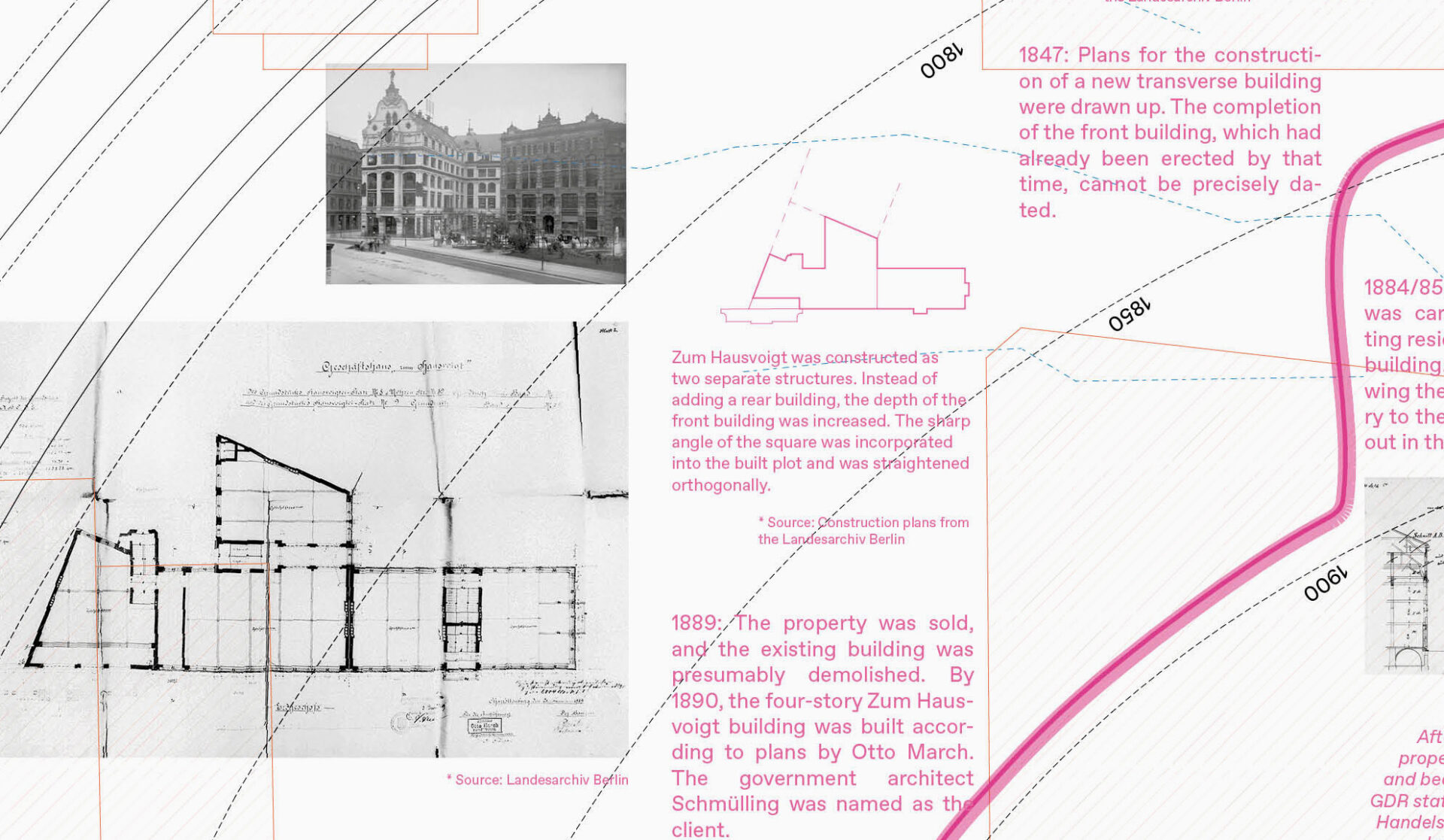
The image descriptions appear in connection with a drawing that records an associated spatio-temporal phase in plan form. Their texts explain essential spatio-temporal features, while the footnotes refer to the source of the plan on which each respective drawing is based.
DOWNLOAD LINK